Computational Biomechanics: Necessity, Importance, and Applications
Dec 15, 2025· ·
1 min read
·
1 min read
Seyed Sadjad Abedi-Shahri
Abstract
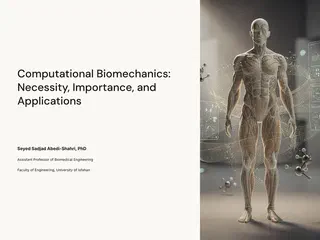
Computational biomechanics has become an essential pillar of modern biomedical engineering, enabling the analysis of biological systems in regimes where experimental measurement is impossible, unsafe, or ethically restricted. Many clinically relevant quantities—such as internal stress, strain, and energy distributions in tissues and organs—are fundamentally inaccessible to direct observation. This talk explains why computational biomechanics is no longer a methodological choice but a necessity. By outlining its theoretical foundations, numerical workflows, and core methodologies, the presentation demonstrates how computational models provide mechanistic insight, predictive capability, and patient-specific analysis across orthopaedic, cardiovascular, and soft tissue applications. Particular emphasis is placed on the role of computational biomechanics in digital health and personalized medicine, where simulation-based decision support and organ-level digital twins are rapidly emerging. The talk concludes by discussing current challenges and future directions shaping the field.
Date
Dec 15, 2025
Event
Research and Technology Week of Faculty of Engineering
Location
University of Isfahan
