Trauma Biomechanics
Course Information
- Course Title: Trauma Biomechanics
- Course Code: 2014471-01
- Credits: 3
- Level: MSc
- Class Schedule: Sunday 8:00-10:00 & Monday 14:00-16:00
- Class Location: Class 30
- Instructor: Seyed Sadjad Abedi-Shahri
- Email: AbediSadjad@gmail.com
- Telegram: @Sad4Abd
- Lecture Materials: Provided weekly via LMS
Course Overview
This course introduces the biomechanical principles underlying traumatic injuries of the human body under high-rate and impact loading. Emphasis is placed on injury mechanisms, injury criteria, and models used in trauma biomechanics, including numerical, experimental, analytical, and systems-level approaches.
The course adopts a model-driven and interpretation-focused philosophy, enabling students to analyze trauma problems. Students will engage with realistic injury scenarios drawn from automotive safety, sports, occupational accidents, and protective equipment design.
Learning Objectives
By the end of the course, students will be able to:
- Explain major traumatic injury mechanisms across different anatomical regions
- Interpret and apply commonly used injury criteria and injury metrics
- Compare experimental, numerical, analytical, and systems-level models in trauma biomechanics
- Critically evaluate trauma biomechanics studies and standards
- Design and justify injury assessment or prevention strategies under real-world constraints
- Communicate biomechanical reasoning clearly, including assumptions and limitations
Syllabus (Topics)
- Module 1 - Foundations of Trauma Biomechanics
- Module 2 - Methods in Trauma Biomechanics
- Module 3 - Head and Brain Trauma
- Module 4 - Spine and Thoracic Trauma
- Module 5 - Abdomen and Extremities
- Module 6 - Special Topics and Synthesis
References
Schmitt, K.U., Niederer, P.F., Cronin, D.S., Muser, M.H., Walz, F. Trauma Biomechanics: An Introduction to Injury Biomechanics, 5th ed.
Evaluation Scheme
- Final Project: 50%
- Individual project, chosen from structured project cards
- Includes report and oral presentation
- Final Exam: 50%
- Conceptual and interpretive questions
This course uses continuous assessment through a major project rather than frequent quizzes.
Project Structure
Each student selects one project from a curated set of project cards, organized into four equally valued pathways:
- 🟦 Numerical / Computational Modeling (FEM)
- 🟩 Experimental / Proof-of-Concept Design
- 🟨 Data-Driven / Analytical Modeling
- Comparative Evaluation of Head Injury Criteria in Traumatic Impacts
- Development of a Simplified Mechanical (Lumped-Parameter) Model for Traumatic Injury Analysis
- Meta-Analysis of Sports Injury Mechanisms from a Biomechanical Perspective
- Uncertainty, Sensitivity, and Robustness in Traumatic Injury Assessment
- 🟥 Prevention, Design & Systems Thinking
All pathways:
- Have comparable difficulty
- Use pathway-specific grading rubrics
- Are equally weighted in assessment
See the Project Cards document and the guide “How to Choose Your Project Pathway” for details.
Project Timeline & Milestones
The course project is a semester-long individual project designed to support deep, mature engagement with trauma biomechanics.
Project assessment combines process-based milestones with final quality-based evaluation, and applies equally to all project pathways.
Overall Grading Context
- Final Exam: 50% of course grade
- Project (total): 50% of course grade
Important:
The detailed grading rubric provided in each Project Card is applied only to the final written report and oral presentation.
Early milestones are assessed using simplified criteria focused on progress, clarity, and appropriate scope.
Week 1-2 | Project Orientation
- Introduction to project pathways and expectations
- Release of:
- Project Cards (all projects)
- “How to Choose Your Project Pathway” guide
- Discussion of grading philosophy and examples
📌 No graded deliverables
Week 3 | Project Selection
- Students review all project cards
- Each student submits:
- Ranked list of three preferred projects
- Brief justification (2-3 sentences per choice)
📌 Instructor confirms project assignments
📌 Not graded
Week 4 | Project Proposal (Milestone 1)
Deliverable: Short written proposal (2-3 pages)
Must include:
- Selected project card and pathway
- Problem statement and objectives
- Planned approach and scope
- Key assumptions and anticipated challenges
Assessment focus:
- Clarity of problem definition
- Appropriate project scope
- Feasibility of the proposed approach
📊 Weight: 5% of course grade
Week 6-7 | Mid-Project Review (Milestone 2)
Deliverable: Progress review (written summary or oral meeting)
Should cover:
- Work completed to date
- Preliminary analysis, design, or concepts
- Identified difficulties or limitations
- Revised plan if needed
Assessment focus:
- Evidence of meaningful progress
- Quality of reasoning and engagement
- Awareness of limitations and challenges
📊 Weight: 10% of course grade
Week 11-12 | Draft Check (Optional, Not Graded)
- Informal submission of:
- report outline,
- preliminary figures or concepts,
- early results or designs
- Feedback provided by the instructor
📌 Strongly recommended but not graded
Final Week | Final Submission & Presentation (Milestone 3)
Final Written Report
- Length: 20-25 pages (excluding appendices)
- Evaluated using the Project Card grading rubric
📊 Weight: 25% of course grade
Oral Presentation & Discussion
- Duration: 15-20 minutes + discussion
- Evaluated using presentation-related criteria from the Project Card rubric
📊 Weight: 10% of course grade
Summary of Project Assessment
| Component | Course Weight | Evaluation Method |
|---|---|---|
| Project Proposal | 5% | Milestone criteria (scope, clarity, feasibility) |
| Mid-Project Review | 10% | Progress and reasoning |
| Final Written Report | 25% | Project Card rubric |
| Oral Presentation | 10% | Project Card rubric |
| Total Project Weight | 50% |
General Notes
- All milestones apply equally to all project pathways
- Projects are individual by default
- Final project quality is evaluated using pathway-specific rubrics
- Early milestones are designed to support learning, not penalize exploration
A successful project is one that is well-scoped, well-argued, and intellectually honest.
Session Outline
| Session | Date | Outline | Additional Resources |
|---|---|---|---|
| 1 | 3 Esfand | Module 1 (U)1 | - |
Policies
- Attendance is recommended but not mandatory.
- Active participation in discussions is encouraged.
- Collaboration in discussion is allowed; all submitted work must be individual.
- Academic integrity is strictly enforced. Plagiarism or misrepresentation will not be tolerated.
(U): Unfinished ↩︎
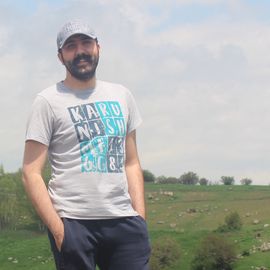
Seyed Sadjad Abedi-Shahri
Assistant Professor of Biomedical Engineering
My research interests include Numerical Methods in Biomechanics, Scientific Computation, and Computational Geometry.