BME Field Overview
Course Information
- Course Title: BME Field Overview
- Course Type: Practical (Skill & Employability)
- Credits: 1
- Total Hours: 32
- Schedule: Sunday 10:00 - 12:00
- Location: Class 43
- Instructor: Seyed Sadjad Abedi-Shahri
- Email: AbediSadjad@gmail.com
- Lecture Materials: Provided via LMS.
Course Overview
This course familiarizes students with career paths in Biomedical Engineering and the technical and soft skills needed for related roles. It offers an overview of major subfields, common professional environments (industry, startups, healthcare, research centers), and includes talks/visits to connect classroom learning with real-world practice.
Learning Objectives
By the end of this course, students will be able to:
- Describe major Biomedical Engineering areas (e.g., biomaterials, bioelectric, biomechanics, health technologies).
- Identify common job roles and professional opportunities in the health ecosystem.
- Explain how core undergraduate courses connect to practical skills and employability.
- Gain introductory familiarity with key technical topics and typical tools/software used in the field.
- Recognize essential professional and engineering ethics in healthcare-related work.
Syllabus
- History of Biomedical Engineering; domains and specializations
- Biomedical Engineering careers and job opportunities (including industry guests)
- Undergraduate curriculum overview and the need for deep disciplinary understanding
- Intro technical topics (signals, biomechanics equipment, orthotics/prosthetics/implants, biomaterials, tissue engineering, data analysis, etc.)
- Types of health-related companies and businesses (startups, manufacturers, labs, tech centers)
- Incubators, science & technology parks, and health-related research centers
- Field visits related to Biomedical Engineering jobs (industry/health services/startups)
- General and specialized software overview (e.g., MATLAB, LabVIEW, CATIA, ImageJ, OsiriX)
- Professional ethics and engineering ethics in health applications
Evaluation Scheme
Class Activities + Assignments: 50%
- Attendance and participation
- Short reflections or assignments
Written Exam: 50%
Teaching & Learning Methods
A combination of instructor-led sessions, discussion-based learning, guest talks by industry professionals, and field visits.
Session Outline
| Session | Date | Outline | Additional Resources |
|---|---|---|---|
| 1 | 3 Esfand | History of Biomedical Engineering | - |
Additional Information
- Special requirements (if applicable): Scientific visits and seminars (as scheduled).
- References: No fixed textbook; materials are provided during the course.
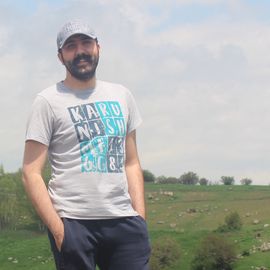
Seyed Sadjad Abedi-Shahri
Assistant Professor of Biomedical Engineering
My research interests include Numerical Methods in Biomechanics, Scientific Computation, and Computational Geometry.